Lactobacillus paracasei
L. paracasei is a probiotic species studied in oral-microbiome and dental-caries research. Study results are strain-specific, and the official GumAktiv page does not show a strain code for this ingredient.

GumAktiv contains three probiotic strains totalling 3.5 billion organisms plus malic acid, inulin, tricalcium phosphate and peppermint.
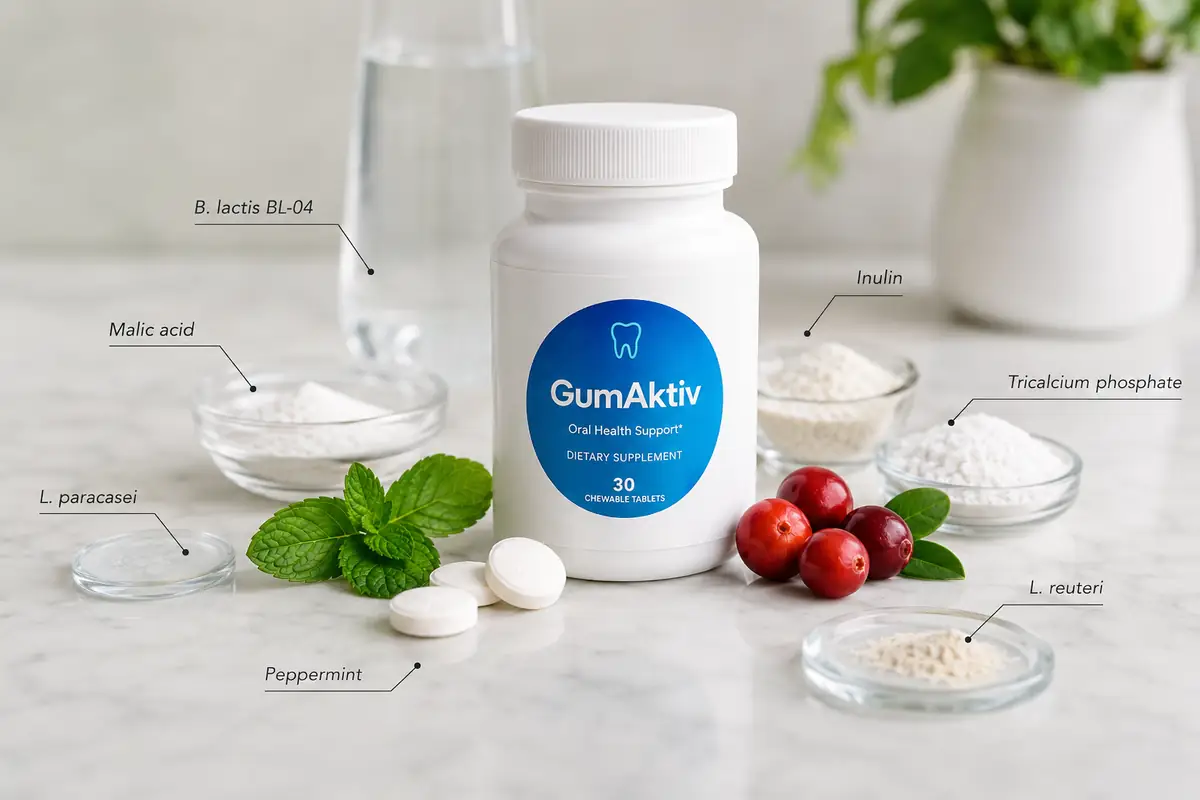
Formula details
The seven highlighted ingredients are Lactobacillus paracasei, B. lactis BL-04, Lactobacillus reuteri, malic acid, inulin, tricalcium phosphate and peppermint.
L. paracasei is a probiotic species studied in oral-microbiome and dental-caries research. Study results are strain-specific, and the official GumAktiv page does not show a strain code for this ingredient.
B. lactis BL-04 is a named Bifidobacterium strain. A 2023 systematic review examined Bifidobacterium probiotics in oral health, but evidence varies by strain and outcome.
L. reuteri has been studied in lozenges and chewable tablets, often as an adjunct to periodontal treatment. Those trials do not establish that every L. reuteri formula has the same result.
Malic acid is an organic acid used in food and supplement formulations. GumAktiv includes it within the supporting formula rather than as a stand-alone dental treatment.
Inulin is a fermentable prebiotic fibre. Its role in the formula is to complement the probiotic ingredients.
Tricalcium phosphate supplies calcium and phosphate and is used in a range of dental and food applications.
Peppermint provides the fresh flavour expected from a chewable oral supplement.
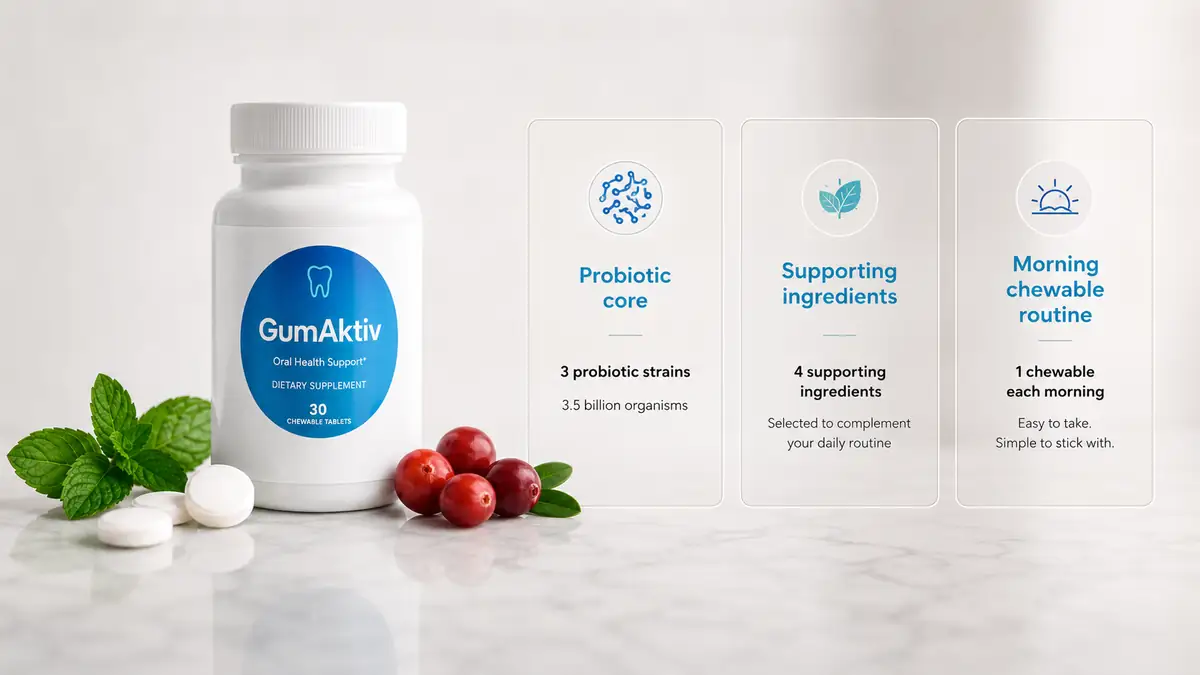
No. The official page gives a combined total of 3.5 billion probiotic organisms but does not state how that total is divided among the three strains.
This means buyers can confirm the strain names and combined count but cannot compare each strain quantity with a specific clinical study.
Research context
Research supports continued study of probiotics for oral health, but outcomes depend on the exact strain, dose, delivery method, dental condition and accompanying treatment.
A systematic review found possible oral-health applications for probiotics while emphasising that changing a stable oral microbiota is complex.
A strain-specific randomised trial found reduced salivary mutans streptococci after L. paracasei SD1. GumAktiv does not identify its L. paracasei as SD1.
A systematic review assessed Bifidobacterium probiotics in oral health. Findings should not be assumed to apply equally to every Bifidobacterium strain.
A randomised trial studied L. reuteri lozenges as an adjunct to scaling and root planing for chronic periodontitis.
A trial examined L. reuteri chewable tablets alongside initial periodontal therapy and reported improvements compared with therapy alone.
These studies do not test the complete GumAktiv formula, its exact strain combination or its supporting ingredients as one finished product.
The GumAktiv review scores formula structure, transparency, package value and ease of use.
Read the GumAktiv ReviewIngredient questions
Yes. L. reuteri is one of the three named probiotic strains.
Yes. Inulin is included as a prebiotic fibre.
Yes. Peppermint is included in the chewable formula.
The official page states a combined total of 3.5 billion probiotic organisms.
The sources reviewed here relate to probiotic categories or individual strains. They do not establish a clinical result for the complete finished GumAktiv formula.