Mimosa Pudica Seed Extract
Mimosa pudica is a botanical included in the 350 mg blend. The official reference list points to laboratory research examining antimicrobial and antioxidant activity, not a human trial of the complete FemiCore formula.

FemiCore contains nine featured ingredients divided between a 350 mg herbal blend and a 50 mg probiotic blend. The label also identifies each Lactobacillus strain and lists the capsule’s other ingredients.
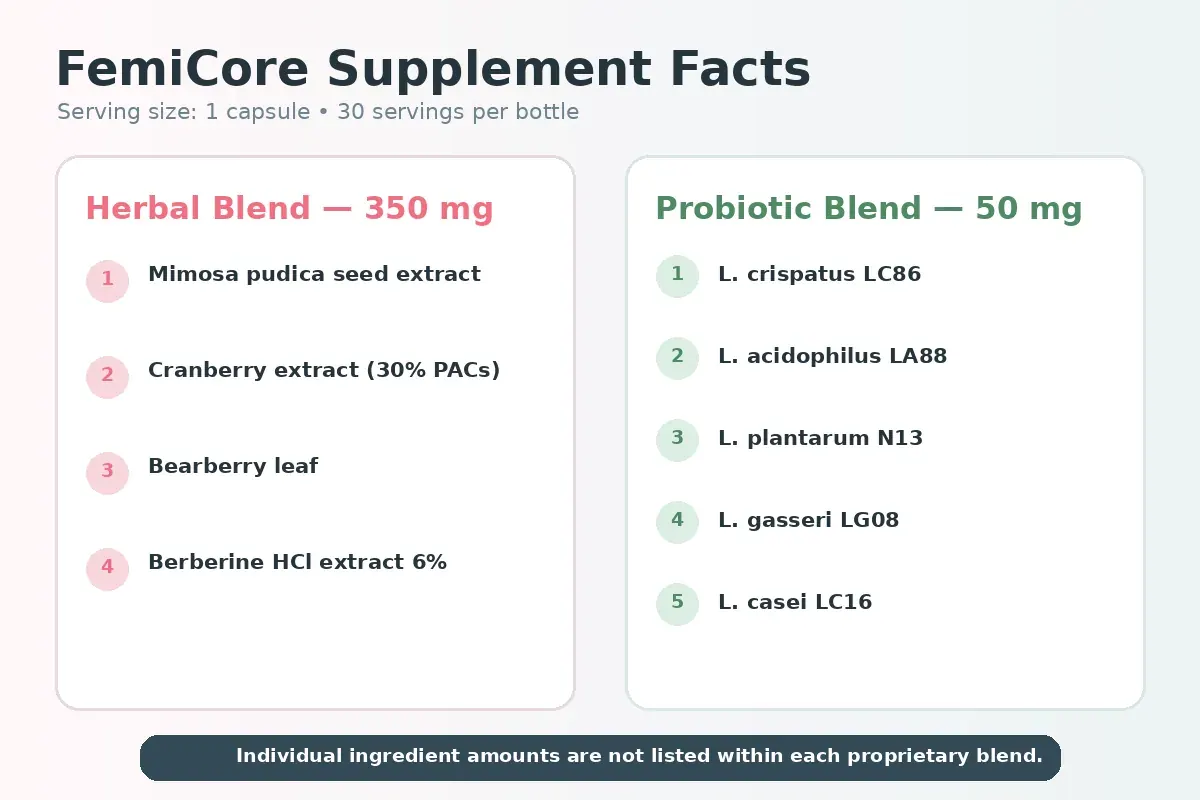
Label details
One capsule is one serving. Each bottle contains 30 servings, with 350 mg of herbal blend and 50 mg of probiotic blend in every serving.
| Label Item | Amount | What Is Listed |
|---|---|---|
| Serving size | 1 capsule | One daily serving |
| Servings per bottle | 30 | 30-day supply |
| Herbal blend | 350 mg | Four botanical ingredients |
| Probiotic blend | 50 mg | Five named Lactobacillus strains |
The herbal blend contains mimosa pudica seed extract, cranberry extract, bearberry leaf and berberine hydrochloride extract.
Mimosa pudica is a botanical included in the 350 mg blend. The official reference list points to laboratory research examining antimicrobial and antioxidant activity, not a human trial of the complete FemiCore formula.
The label identifies Vaccinium macrocarpon berry extract standardised to 30% proanthocyanidins. Cranberry compounds have been studied for their effect on bacterial adherence in the urinary tract.
Bearberry is listed as Arctostaphylos uva-ursi leaf. The official references include a clinical-trial protocol for acute uncomplicated cystitis; a protocol describes planned research rather than a completed result.
The official reference list includes an animal study examining berberine and bladder detrusor response. Animal findings should not be treated as proof of the same effect in people.
The 50 mg blend contains five named Lactobacillus strains, each identified by a strain code on the label.
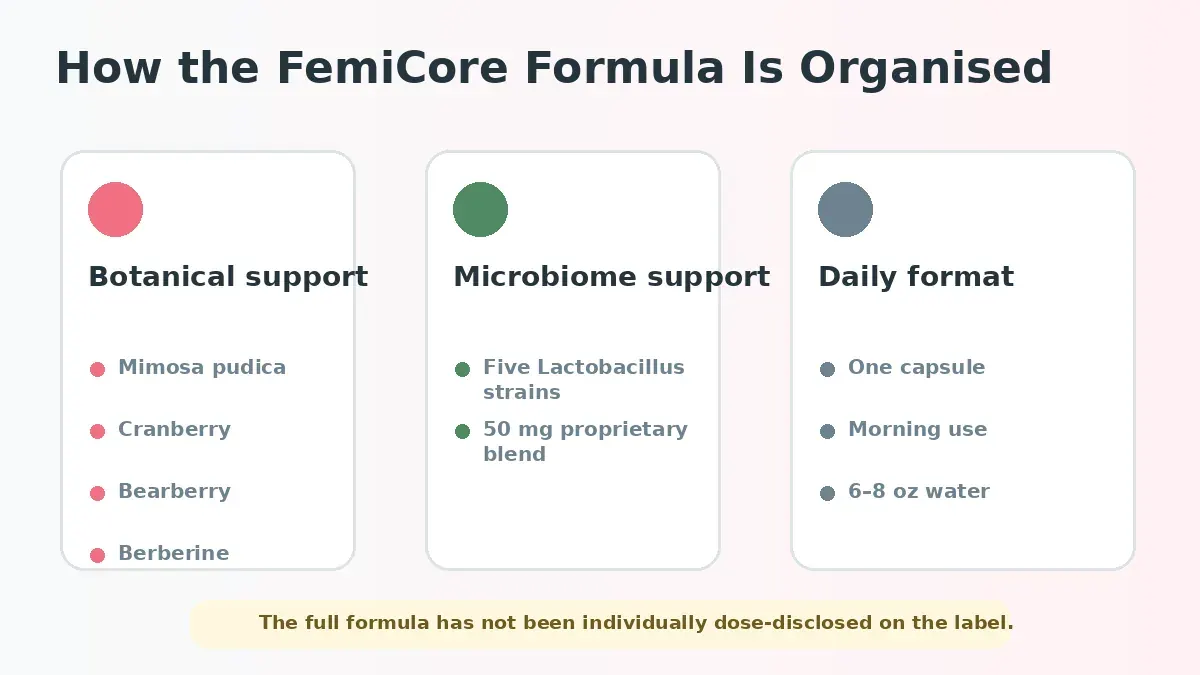
Evidence context
The official reference list includes human urinary-microbiome studies and probiotic reviews, plus laboratory, animal and protocol evidence for some botanical ingredients.
A study in women examined urinary microbiome community types and urinary-incontinence severity. This supports the relevance of studying the urobiome, not a claim that FemiCore treats incontinence.
A review discussed the role of probiotics in vaginal health and the importance of Lactobacillus species in female microbial balance.
Research examined whether cranberry juice could reduce bacterial adherence, providing an early rationale for cranberry in urinary-wellness products.
An in-vitro study examined antimicrobial and antioxidant activity of Mimosa pudica. Laboratory results do not confirm a clinical outcome in humans.
A published protocol outlined a randomised trial of bearberry for acute uncomplicated cystitis. A protocol does not supply final trial results.
A rat study examined berberine and bladder-muscle response in a diabetic model. This is preclinical evidence.
No. The label gives 350 mg for the entire herbal blend and 50 mg for the entire probiotic blend, but it does not divide those totals among the individual ingredients.
This is the main formula-transparency limitation. Buyers can confirm which ingredients and strains are included, but cannot compare each ingredient dose with amounts used in individual studies.
The other ingredients are gelatin, brown rice flour, magnesium stearate, olive oil and silicon dioxide.
The FemiCore review scores the formula structure, disclosure quality, package value and ease of use.
Read the FemiCore ReviewIngredient questions
Yes. It contains cranberry extract standardised to 30% proanthocyanidins.
Yes. It contains five named Lactobacillus strains in a 50 mg proprietary blend.
Yes. Bearberry leaf is one of the four ingredients in the herbal blend.
The label lists gelatin as the capsule material, so the product is not presented as vegetarian.
No CFU amount appears on the label image. The probiotic blend is listed by weight as 50 mg.